Mycelium Brick Fabrication System
The Mycelium Brick Fabrication System (MBFS) is a partially automated machine designed to produce mycelium-based bricks from agricultural waste. Mycelium materials are grown from fungal networks that bind organic substrates such as sawdust or crop waste into lightweight composite materials.

Structure Composed of Mycleium Bricks
This project explores how automated fabrication systems can improve the consistency, scalability, and accessibility of mycelium material production, which is often currently done through labor-intensive manual processes.
My Role
I designed and developed the incubation system used to grow the mycelium bricks after inoculation.
The incubator provides the controlled environment necessary for fungal growth and material formation. My work focused on designing a system that could maintain the environmental conditions required for consistent brick production while remaining modular and scalable.

Incubator Sketch Front View
Sustainability was a key consideration in the design of the incubation system. The machine was developed to minimize environmental impact while supporting the growth requirements of mycelium materials.

Incubator Sketch Side View
To support this goal, the structure incorporates natural and renewable materials such as cork and wood for the base and insulation. These materials provide effective thermal insulation while reducing reliance on synthetic foams and plastics.

Incubator 3D Render
Circuit Development
I attached a video demonstrating testing of the incubation circuit. In the video, the temperature probe is placed in hot water, causing the fan speed to increase. When the probe is moved to cold water, the fan slows down.
Incubation circuit test video
The purpose of this test is to confirm that the Arduino is properly communicating with the temperature sensors and controlling the electronic components accordingly. This verifies that the system responds appropriately to changes in temperature.
Since the incubator must maintain a constant temperature and humidity, it is crucial that all electronic components react accurately to environmental conditions.
Misting System Development
The misting system is designed to maintain the appropriate humidity levels within the incubator, which is essential for the optimal growth of mycelium bricks. This system uses sensors to monitor humidity and automatically activate misting nozzles when needed.
The video shows the misting system functioning properly after testing different pressure levels and verifying that the nozzles activate as needed to maintain the desired humidity within the incubator environment.
Misting System Test Video
Construction
At this stage of the project, I integrated the misting and electrical systems to create a controlled incubation chamber for the mycelium bricks.
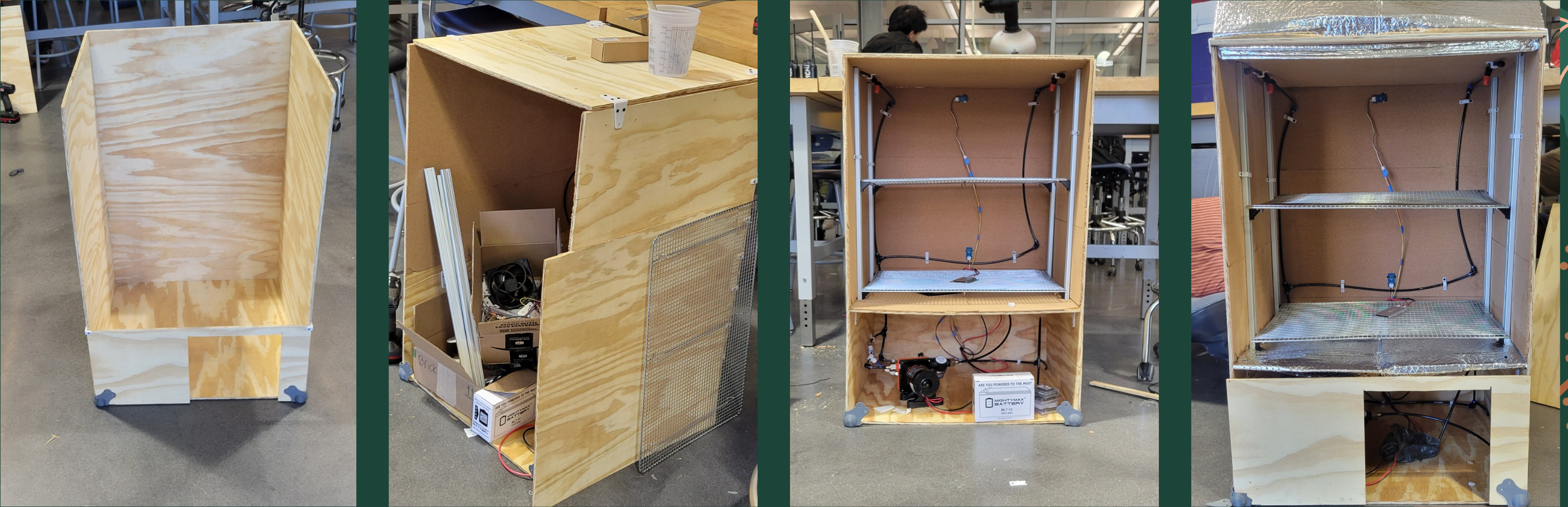
Construction of the Incubator
Testing and Data Collection
Tempature Test:The Arduino code and connected heating and sensing components were designed to regulate the temperature inside the incubation chamber at 75°F, providing optimal conditions for mycelium brick growth. During testing, the system gradually increased the chamber temperature until it reached the 75°F target, where it successfully maintained a stable temperature.
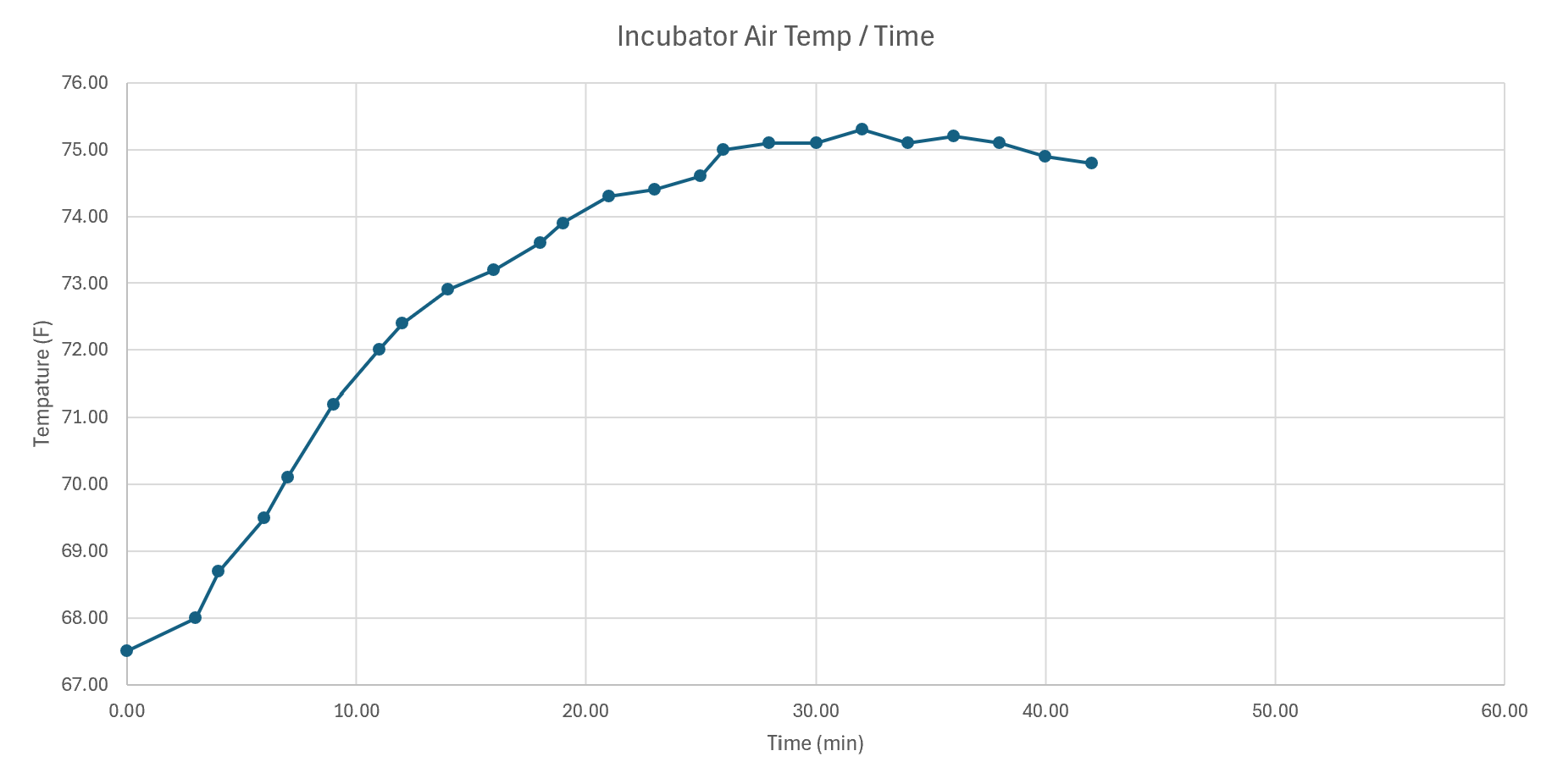
Incubator Chamber Tempature Over Time
Heater Test:For safety, the heating element was required to remain below 200°F during operation. Testing was conducted to monitor the temperature of the heating element, and the results confirmed that it remained below the 200°F safety limit throughout operation.
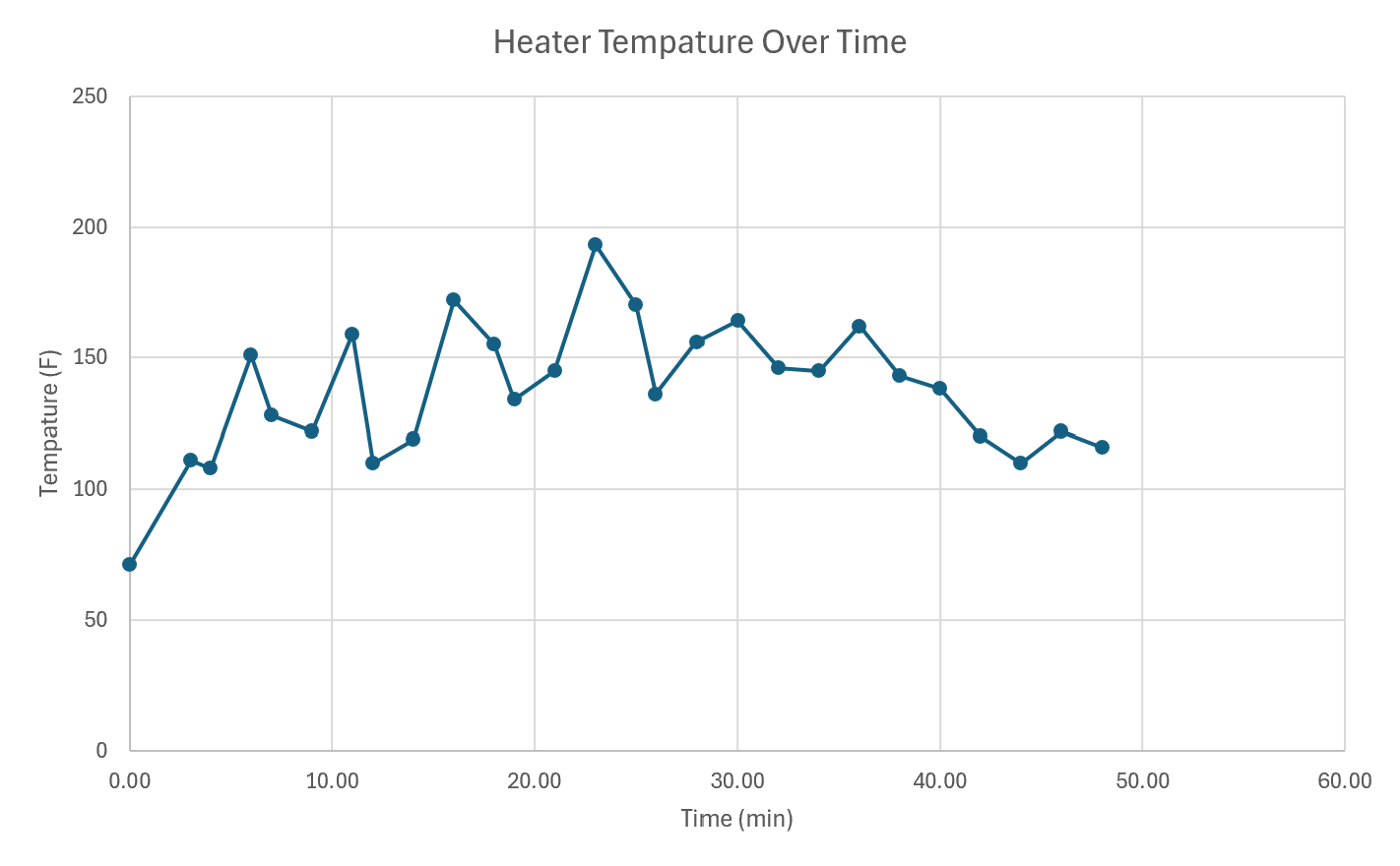
Heating Element Tempature Over Time
Humidity Test: Based on the testing data, the inner chamber loses approximately 0.6% humidity per minute. Using this rate, the Arduino pump logic can be programmed to activate the misting system when humidity falls below 95% and remain on until the chamber reaches 99% humidity. This results in the misting system activating approximately every six minutes to maintain the desired humidity range.
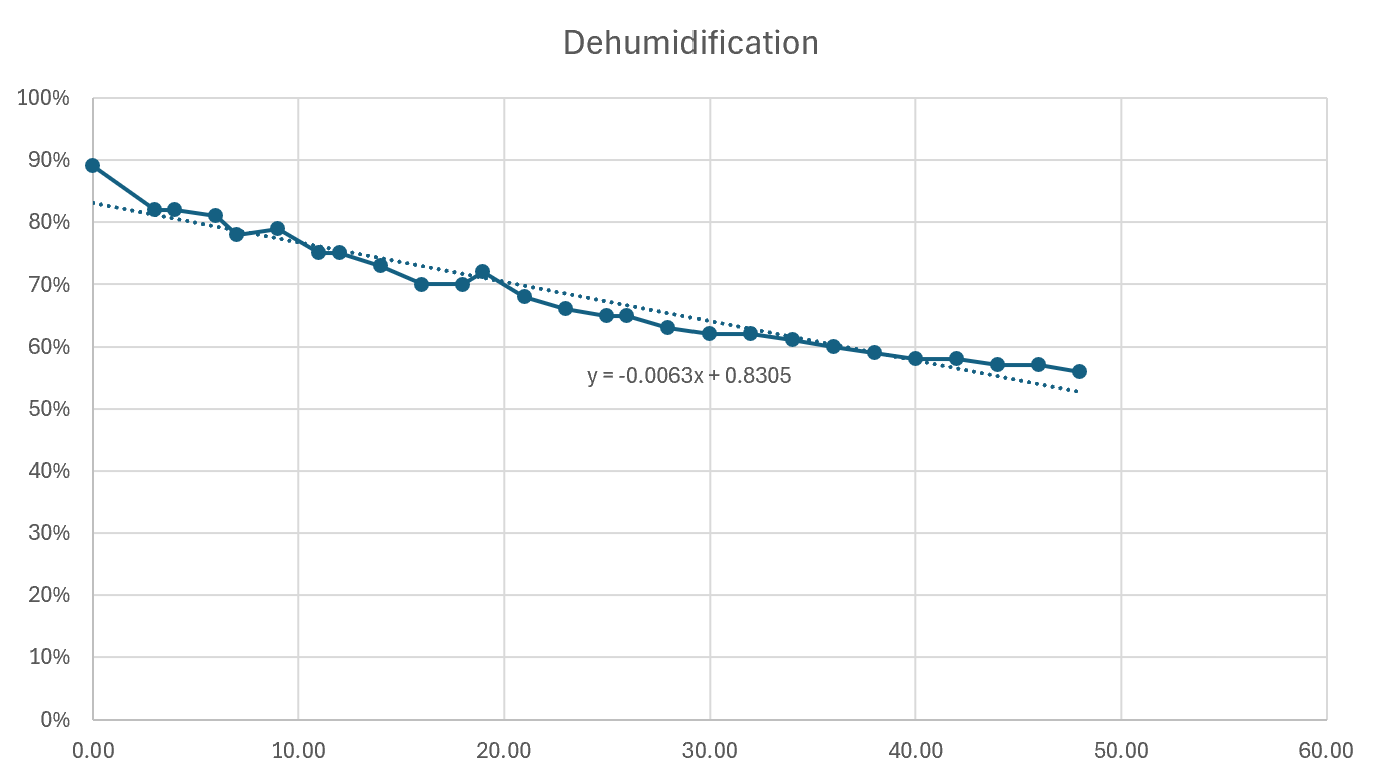
Dehumidification Over Time
Conclusion
The final incubation system combines the heating, sensing, and misting systems into one controlled environment for growing mycelium bricks. Through testing and iteration, I was able to determine how the chamber responds to changes in temperature and humidity and use this data to improve how the system operates.
The completed incubator can maintain the temperature and humidity conditions needed for mycelium growth while automatically responding to changes inside the chamber. This project demonstrates how automation can be incorporated into mycelium fabrication to reduce the amount of manual monitoring required and create a more consistent growing environment.
The completed incubator demonstrates how automation can reduce the amount of manual monitoring required during mycelium fabrication while creating more consistent growing conditions. The project was also selected for the Dr. Ernel Simpson Innovation Award and was featured by the TCNJ School of Engineering for its approach to sustainable material production. I was also honored to receive the Conrad Johnson Award for my craftsmanship.